
Skip to content

Cart

Your cart is empty

Continue shopping
0.5 Hz 2 Hz 10 Hz
Frequency · Pulsed photobiomodulation

The rate changes
the outcome.

Red light works at any frequency. But pulsing it at specific rates — 10 Hz, 40 Hz, 100 Hz — produces measurably different effects. Some of those effects are backed by hard research. Some are emerging. Some are practitioner lore. Here’s the honest map.

Well-established
Continuous wave, published RCTs, decades of PBM research.
Emerging
10 Hz, 40 Hz, 100 Hz — real mechanism, growing clinical data.
Speculative
Rife-adjacent, 200–999 Hz. Practitioner-used, not peer-reviewed.
0999 Hz
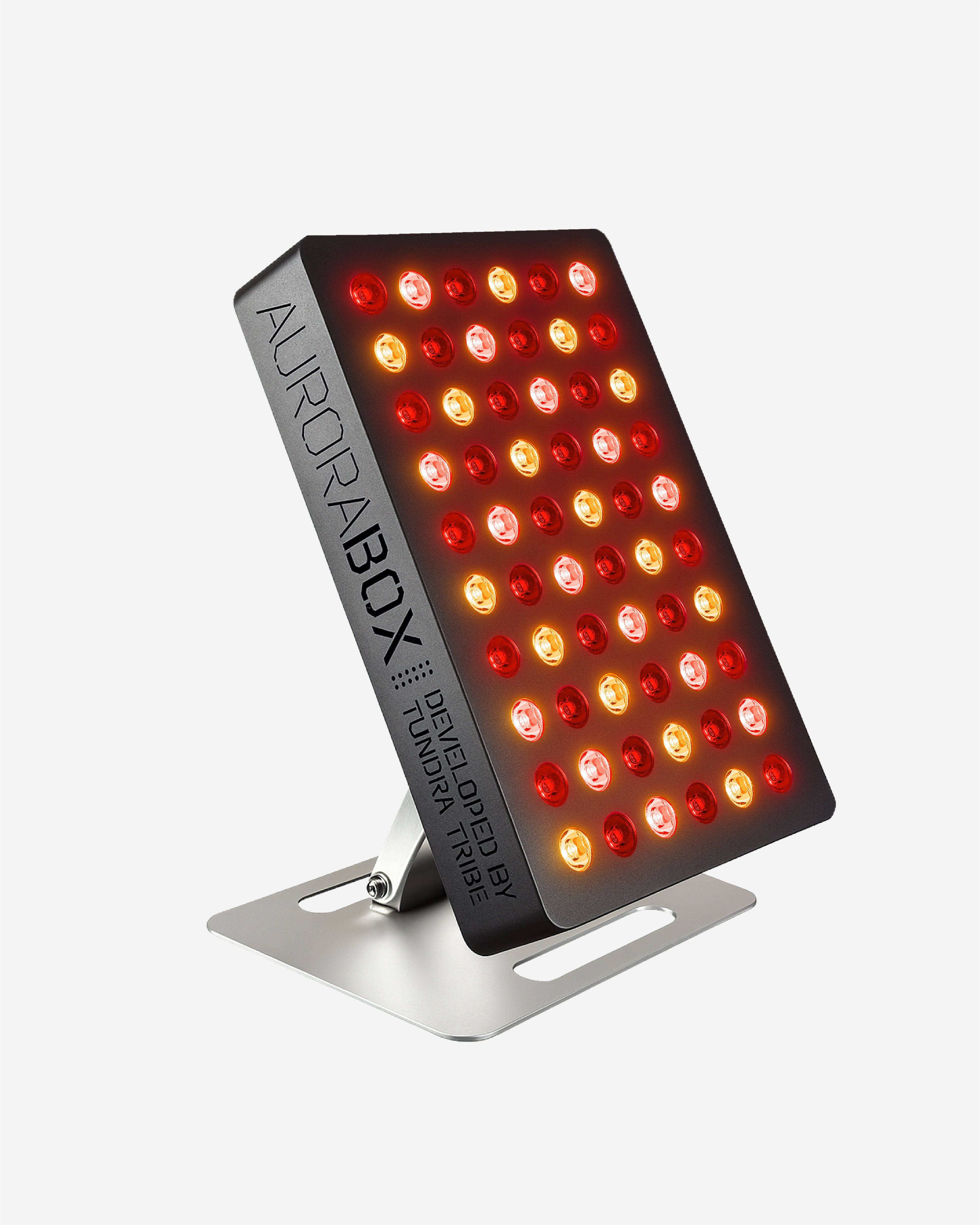
Adjustable pulsing on AuroraBox panels
6
Research-supported Hz bands mapped
40 Hz
MIT gamma Alzheimer’s research
Explore frequencies
The Hz explorer

Watch what the rate actually does.

Tap any frequency. All three visualizations retime to that exact rate in real time. You’ll see why 10 Hz entrains and 100 Hz doesn’t — without reading a single paper.

Select a frequency
Alpha band · Emerging
Calm brain · sleep onset
One full cycle every 100 milliseconds
10 Hz pulsing mirrors the alpha-wave state associated with relaxed awareness and the transition into sleep. Applied transcranially in small PBM pilot trials to support parasympathetic activation.
Barrett & Gonzalez-Lima, Neuroscience 2013
10Hz
Alpha
Cycles observed · 0
Sine waveformOscillating at 10 Hz
Pulse timelineON/OFF at 10 Hz
Rotational rate10 revolutions per second
Application · Starting points

Which Hz for which goal.

A starting map for common intents — matched to the research in Section 2 above. Not a protocol prescription. A place to begin.

This is a starting map, not a prescription. Individual response varies by condition, age, tissue type, and goal. Pair with practitioner guidance for serious conditions. Most protocols compound over 4–12 weeks of consistent use.

Better sleep
Alpha-band pulsing to support parasympathetic activation and melatonin onset. Use red-only wavelengths in evening.
10Hz
Alpha
10 min pre-bed
630 / 660 nm · daily
Afternoon energy · focus
Gamma entrainment supports cognitive alertness. Morning exposure leverages circadian biology for downstream benefit.
40Hz
Gamma
10 min AM
All 5 wavelengths · 5x/wk
Cognitive health · memory
40 Hz gamma research — MIT Tsai Lab Alzheimer’s work. Preclinical strong; human trials ongoing. Preventive framing.
40Hz
Gamma
8 min daily
810 / 830 nm · transcranial
Joint · knee pain
Beta-range pulsing for chronic pain modulation. 37 RCTs on knee OA show strongest effect at 8–12 weeks consistent use.
33Hz
Beta
10 min / session
810 / 830 / 850 nm · 4x/wk
Post-workout recovery
High-frequency pulsing or continuous wave within 4 hours post-training. Reduces CK markers, accelerates recovery.
100Hz
High
10 min post-training
Or continuous · 810 / 850 nm
Skin collagen · anti-aging
Continuous wave delivers maximum photonic energy to fibroblasts. Collagen density rises over 8–12 weeks of consistent use.
0Hz
Continuous
10 min daily
630 / 660 nm · facial distance
Wound · acute injury
100 Hz pulsing accelerates re-epithelialization in preclinical wound studies. Acute injury window within 72 hours matters most.
100Hz
High
10 min daily
660 / 810 / 830 nm
Chronic pain syndromes
Alpha or beta-range depending on pain profile. Fibromyalgia trials show moderate effect at 10–33 Hz with near-daily consistency.
1033Hz
Alpha/Beta
10 min daily
810 / 830 / 850 nm

These are starting points drawn from the research, not individualized protocols. If a specific condition is driving your interest, the By Condition page has deeper breakdowns per condition. If you want session-by-session structure, Healing Protocols is where that lives. Keep going.